Draft preview — unpublished partner-review rebuild. Estimate forms are wired to CRM tracking for safe configuration and testing; not published.
FAQ

Asbestos service FAQs for Boise property owners

Answer-first questions about hiring, inspection, testing, cost, removal, encapsulation, scheduling, and Idaho regulation. Deeper service questions route to the owning pages. No unsupported credentials or numeric prices. Last reviewed October 25, 2026.
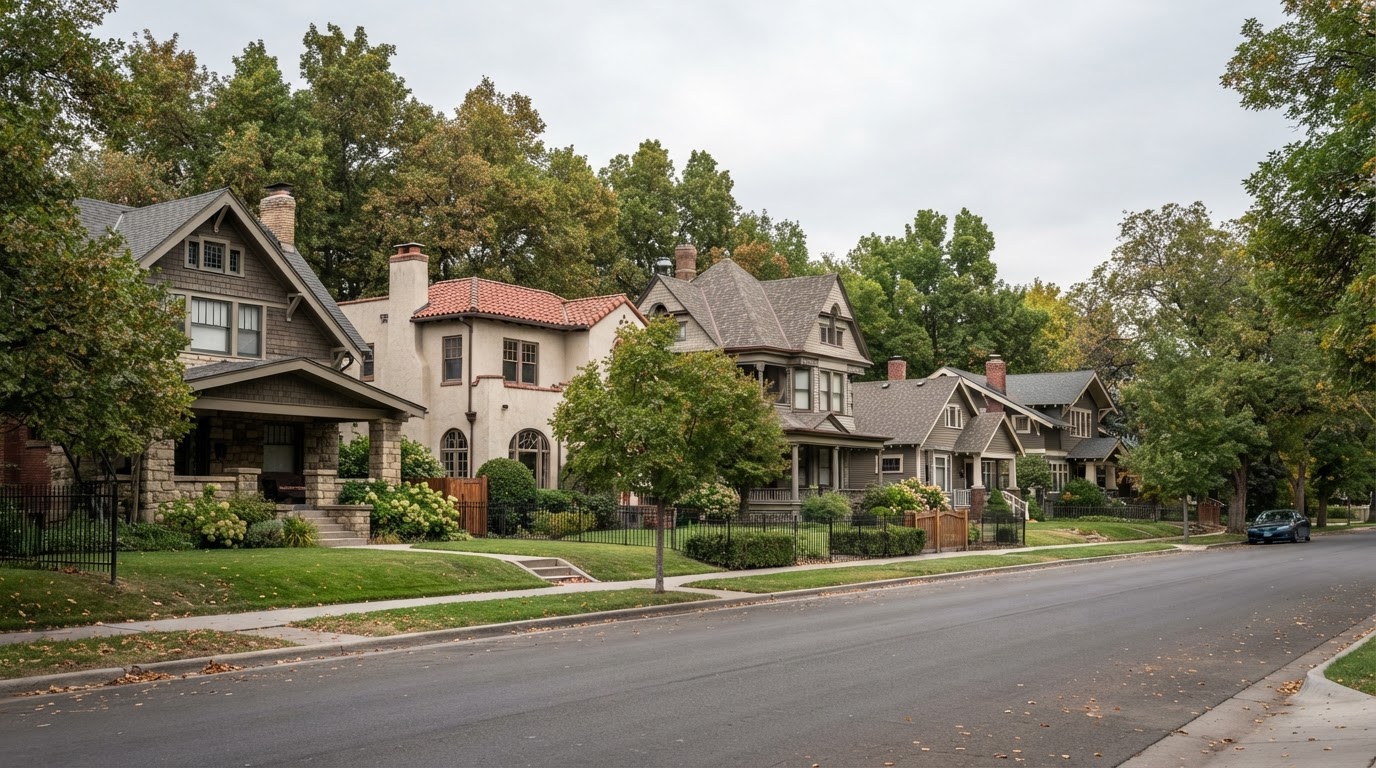
A row of older residential homes with varied rooflines and mature trees along a quiet street, representative of established neighborhood architecture.
Section 1

Hiring and credentials

1. What should I ask before hiring an asbestos contractor?

Ask for a written assessment scope before any disturbance — one that names the rooms, surfaces, or systems reviewed, the suspect materials and their condition, the agreed sampling scope, and the areas it could not reach. Pair it with a test-before-disturbance approach, documented containment and clearance steps, and current training and insurance evidence. The four things worth requiring are a written scope first, testing before disturbance, the containment and HEPA plan on paper, and clear clearance steps for your specific project.

2. What training documentation should I request?

Ask for current training documentation for the crew assigned to your project, dated for the work dates. Request it directly from the contractor you hire. Training records for asbestos work are specific to the task and the crew, so ask for the documentation that matches your project scope.

3. Should I ask for insurance evidence?

Yes. Ask for evidence of insurance that is current for the dates of your project, and ask whether it covers the type of work you're scheduling. As with training, request it directly rather than relying on a general claim. A certificate that has expired, or that doesn't cover the asbestos scope, isn't useful to you — so confirm the dates and the coverage before work begins.

4. Should the assessment or clearance be independent?

An independent completion assessment is a reasonable thing to ask about. Clearance criteria are scope-dependent professional controls — not a promise of zero fibers. Ask who performs clearance, what criteria they use, and whether that party is independent from the removal work. Separating the assessment from the removal can reduce a conflict of interest, but the specifics depend on the project.
Section 2

Inspection and testing

5. Can I identify asbestos by appearance?

No. The EPA advises that appearance alone cannot identify asbestos. A sample collected and analyzed by a laboratory is the way to confirm whether a suspect material contains asbestos. Many materials that look ordinary can contain asbestos, and many that look suspicious do not — so visual guesses are not a reliable basis for a removal or encapsulation decision.

6. How does inspection differ from testing?

An inspection is a walkthrough assessment of accessible areas to identify suspect asbestos-containing materials and their condition. Testing is sampling and laboratory analysis that confirms content. They are often paired — see inspection and testing. The inspection tells you what to look at and what shape it's in; the test tells you what's actually in it.

7. Does air testing replace material testing?

No. Air testing and bulk material analysis answer different questions. Bulk laboratory analysis of a sample confirms whether a material contains asbestos; air testing assesses fibers in the air under defined conditions. Material testing usually comes first, because you need to know what the material is before deciding how to handle it. Air testing has a role in clearance and in specific exposure questions, but it doesn't tell you whether the floor tile in the next room contains asbestos.

8. What should a laboratory report explain?

A report should identify the material sampled with its sample ID, the location it came from, the method used, and whether asbestos was detected — including the type and percentage where reported. Where flooring or other materials have multiple layers, the report should distinguish which layer each result applies to, because a negative on the top layer does not speak for the one beneath it. It should also note its limitations — which materials or areas were not sampled — so you know what the report does not establish. Keep it with your project records; it informs the removal, encapsulation, or management-in-place decision.
Section 3

Cost and written estimates

9. What affects the estimate?

Material type and condition, quantity and layers, location and access, whether the work area is occupied, containment needs, analysis and clearance scope, and waste handling. Pricing is based on the assessed project scope — ask for an itemized estimate. Each of these changes the labor, the containment, the waste stream, or the clearance steps, so a flat rate doesn't reflect the work.

10. Does more than one flooring layer affect scope?

It can. Where new flooring was laid over older material, the hidden layers are suspect until sampled. More layers can mean more containment, labor, and waste handling — all confirmed in the written scope. Removing one layer can disturb the one beneath it, so the scope has to account for the full stack, not just the top.

11. Are clearance and disposal included?

They should be in the written scope, and so should the exclusions. Clearance criteria and regulated waste handling are scope-dependent professional controls — ask what is included and what is excluded before agreeing. Also confirm whether replacement flooring, ceiling finishing, painting, reconstruction, or other repairs are included or handled separately; abatement and restoration are often different scopes. Waste from asbestos work is handled under specific requirements, and clearance is assessed against criteria tied to the scope, so both belong in the estimate, not as afterthoughts.

12. Is an online request a binding quote?

No. An online request starts the conversation; it is not a contract or a binding price. A written estimate is based on the inspected project scope — see terms. The request tells us the address and the service need; the estimate follows the assessment and reflects what's actually there.
Section 4

Removal and encapsulation

13. Does every positive material need removal?

No. The EPA notes that intact, undisturbed material does not always require removal. Removal, encapsulation, or management in place depends on the material's condition and the project scope. A positive result tells you asbestos is present; it doesn't by itself tell you the material has to come out.

14. How does encapsulation differ from removal?

Encapsulation leaves intact material in place under a sealed barrier so fibers are not released — it does not remove asbestos. Removal takes the material out. Which fits depends on condition and scope — see encapsulation. Encapsulation can be appropriate where the material is intact and won't be disturbed; removal is the path when the material has to go or will be disturbed by the work.

15. When does renovation change the decision?

When planned work will disturb a suspect material, the decision shifts toward defining and testing first. A renovation that leaves intact, undisturbed material alone may not require removal — see residential removal and commercial removal. The planned work is what turns a stable material into a disturbance risk, so the scope follows the renovation plan.

16. What should happen if suspect material has been disturbed?

Stop disturbing the material, limit access to the area, and contact qualified help. Do not attempt cleanup yourself. A qualified professional can assess the disturbed area and advise on the next step — disturbance is a reason to bring in a professional, not a reason to start scraping or sweeping. Limiting access keeps people away from the area until someone who knows the scope can assess it.
Section 5

Scheduling, occupancy and completion

17. How is timing determined?

Timing depends on the scope, the laboratory turnaround, and the work-zone plan. We confirm the expected schedule with the project rather than promise a fixed number of days. Sampling has to go to the lab, the results have to come back, and the work has to be phased around occupancy — so the schedule follows the scope, not a catalog.

18. Can a home or building remain occupied?

It depends on the scope. Some projects can be phased so an area is isolated; others require vacating the work area. Ask for the re-entry criteria in writing — what has to be checked before people return to the space — and ask what material remains in place after the work, since encapsulated or unaddressed material may carry future management notes. Occupancy and access planning are part of the written scope, not a guarantee.

19. What records should be kept?

Keep the inspection findings, laboratory reports, the written scope, and any clearance and waste-handling records. Documentation supports the project and any later renovation or sale. A future buyer, a contractor, or a regulator may ask what was found and what was done — the records answer that.

20. Does clearance mean zero fibers?

No. Clearance is assessed against scope-dependent criteria — it is not a guarantee of zero fibers. Ask what criteria are used and who performs the completion assessment. The standard for clearance is defined for the scope, not as an absolute promise that no fiber anywhere can be detected.
Section 6

Boise service requests and project regulations

21. Do you review Boise-area project requests?

Yes. We review Boise-area project requests. To confirm nearby coverage for your address, share it on the request — see service areas. The request is the starting point; we confirm the location is within the area we serve before scheduling.

22. How can I confirm nearby coverage?

Share the project address on the request or call (208) 934-1065. We'll confirm whether the location is within the area we serve before scheduling. Coverage depends on the address and the scope, so the fastest way to a yes or no is to send the address.

23. Who oversees asbestos notification in Idaho?

Idaho DEQ oversees Tier 1 major facilities, and EPA Region 10 handles nonmajor facilities. Qualifying renovation and demolition notification requirements depend on the project, building, and material scope. The split between state and federal oversight follows the facility classification, so the right place to start is the DEQ compliance page linked here.

24. Does every residential project have the same regulatory requirements?

No. Requirements depend on the project, building, and material scope — not a blanket rule for every home. See Idaho DEQ and the EPA NESHAP overview for the applicable rules. A small repair and a full demolition are not the same project, and the notification and work requirements reflect that difference.
Regulation

Idaho and federal asbestos references

Notification and work requirements depend on the project, building, and material scope.

Idaho DEQ

Idaho DEQ oversees Tier 1 major facilities; EPA Region 10 handles nonmajor facilities. Qualifying renovation and demolition notification requirements depend on the project, building, and material scope. See the Idaho DEQ air-quality compliance page.

EPA NESHAP

The federal asbestos NESHAP sets renovation and demolition standards. See the EPA NESHAP overview and the EPA asbestos guidance.

Still have a question?

Ask about your Boise project

Share the address and the service request. We’ll follow up about the assessment, the options, and a written scope — pricing is determined by the inspected project.

The property or project address for this request.

I agree to receive service-request messages from Boise Premier Asbestos Removal at the number provided. Message frequency varies. Message and data rates may apply. Reply STOP to opt out or HELP for help. See our Privacy Policy and Terms. Consent is optional and not required to submit this request.