Draft preview — unpublished partner-review rebuild. Estimate forms are wired to CRM tracking for safe configuration and testing; not published.
Testing

Asbestos testing in Boise, Idaho

Professional sampling and laboratory analysis that confirms whether a suspect material actually contains asbestos. Scope and lab method determine what a report establishes. Tell us the material and the location.

The property or project address for this request.

I agree to receive service-request messages from Boise Premier Asbestos Removal at the number provided. Message frequency varies. Message and data rates may apply. Reply STOP to opt out or HELP for help. See our Privacy Policy and Terms. Consent is optional and not required to submit this request.

Scope

What asbestos testing establishes

Testing answers whether a professionally collected suspect material contains asbestos. The scope and the lab method determine what a report establishes — a positive sample is interpreted with the location, the condition, and the planned work.

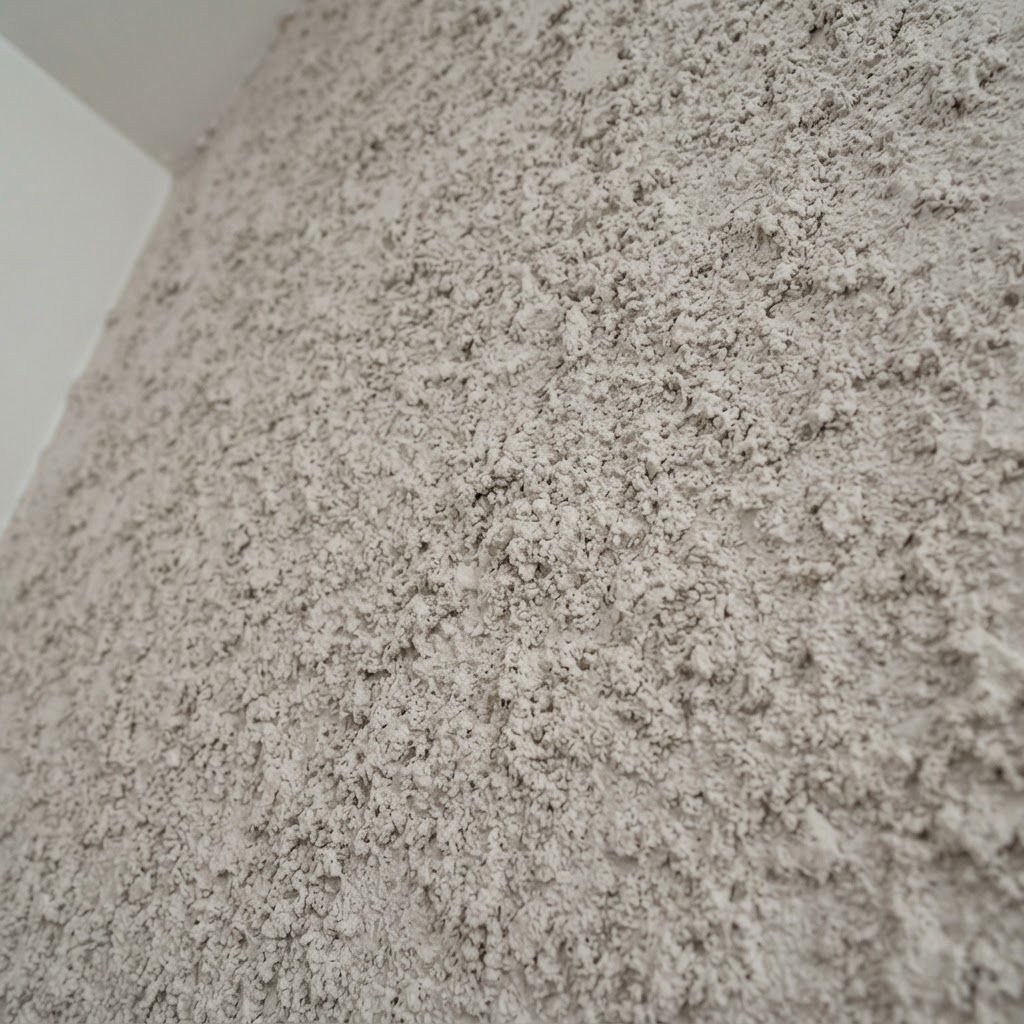
Close view of a textured cottage-cheese popcorn ceiling surface in an older home — a common suspect category sampled for laboratory analysis.

Suspect ceiling materials

Ceiling materials such as sprayed acoustic texture are a common suspect category in older Boise homes. Testing answers whether the material at your property actually contains asbestos — not whether every ceiling of that style does.

A sample is collected from the suspect ceiling material and submitted to a laboratory for bulk analysis. The report identifies the material sampled, the method used, and whether asbestos was detected, including the type and percentage where reported. Sampling is scoped to the locations relevant to your project.

The outcome is a laboratory report you can read and keep with your project records. A positive result is interpreted with the material's location, condition, and your planned work — it does not automatically mean removal, and it is not a clearance or a whole-building certificate.
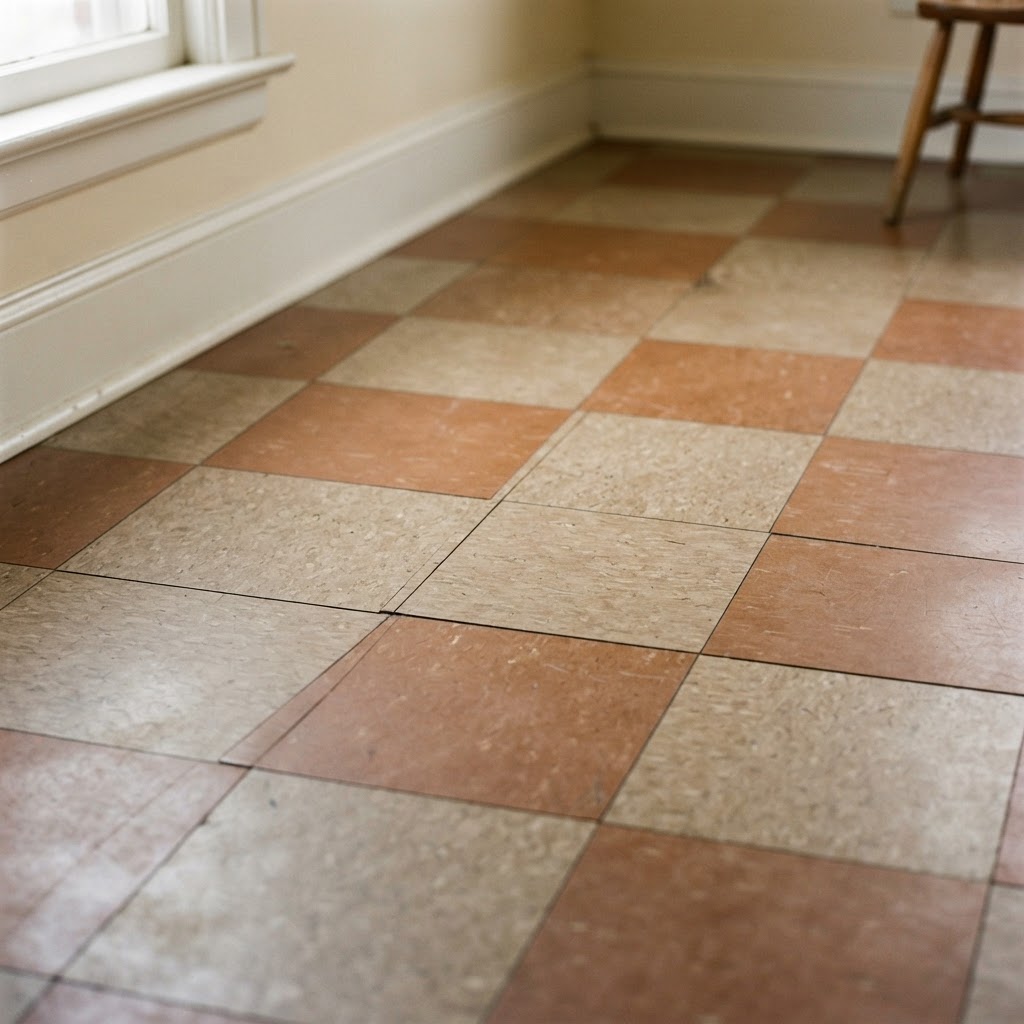
Close view of vintage nine-inch vinyl composition floor tiles in a checkerboard pattern — flooring and the mastic beneath it are separate suspect layers.

Flooring plus separate adhesive and backing layers

Flooring is often more than one layer. Vinyl floor tile, the mastic adhesive beneath it, and the backing on sheet flooring are separate materials that can each be suspect — and a newer floor laid over an older one can hide suspect layers below.

Each relevant layer is sampled and submitted for bulk analysis, because the adhesive and backing are distinct materials from the tile or sheet goods above them. The report identifies which layer was sampled and whether asbestos was detected in that layer. Sampling is scoped to the materials and locations relevant to your project.

The outcome is a laboratory report that documents each sampled layer. A positive result in one layer does not mean every layer is asbestos, and a negative result in one layer does not clear the others — the report is interpreted layer by layer alongside the condition and the planned work.

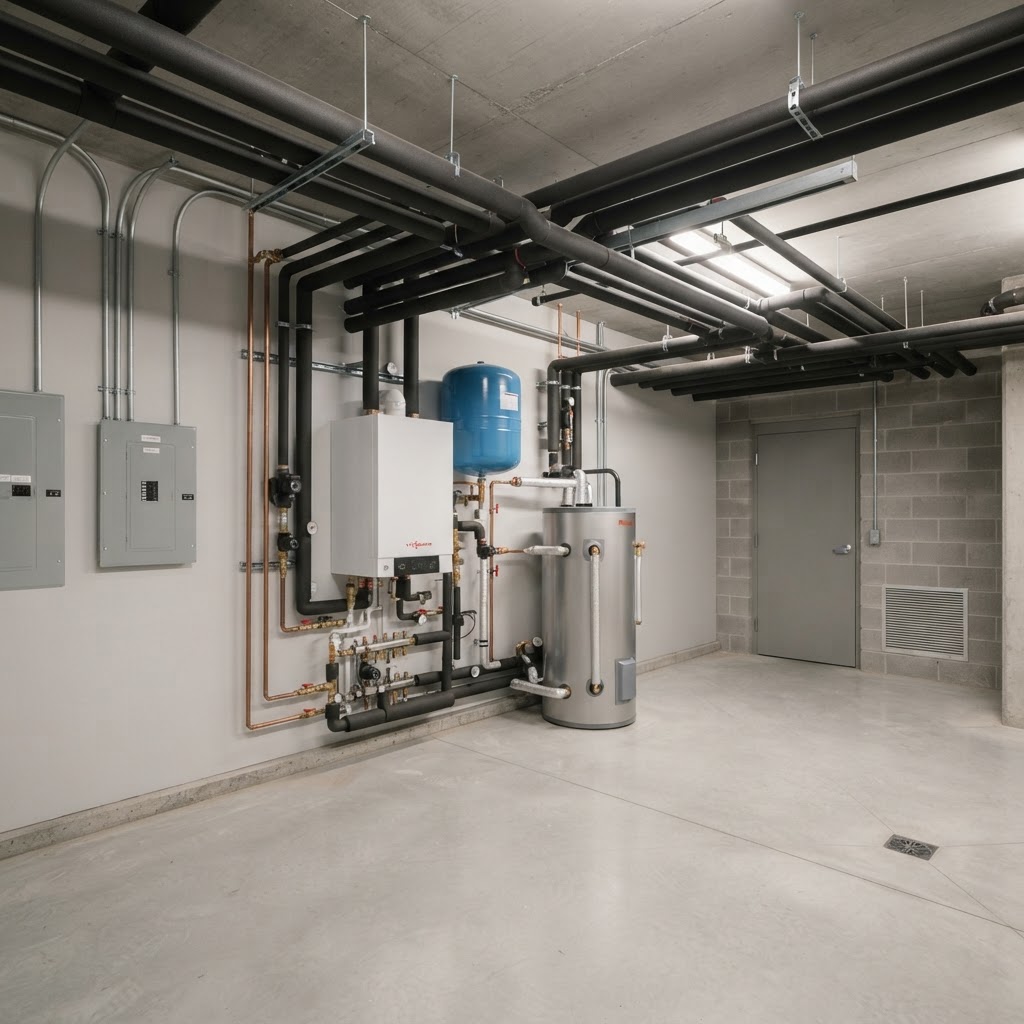
Insulated pipes along the ceiling of a residential utility room — thermal insulation and exterior siding are common suspect categories.

Insulation and exterior material assessment

Thermal insulation on heating and plumbing pipes, and exterior materials such as fiber-cement siding and panels, are frequent suspect categories. Testing answers whether the material at your property contains asbestos.

A sample is collected from the suspect insulation or exterior material and submitted for bulk analysis. The report identifies the material sampled, the method used, and whether asbestos was detected. Sampling is scoped to the accessible materials relevant to your project — not a blanket test of every surface in the building.

The outcome is a laboratory report for the sampled materials. A positive result is interpreted with the location, condition, and planned work; it does not automatically mean removal, and it is not a clearance or a promise that every material in the building has been tested.

Bulk material testing is distinct from air monitoring and post-abatement clearance. Neither is a universal whole-building asbestos-free certificate — a positive sample is read alongside the material’s location, condition, and your planned work. This company does not own a laboratory; samples are submitted to an appropriate laboratory for analysis.

What a test answers

What does an asbestos test answer — and what does it leave open?

Bulk material analysis, air monitoring, and a post-work completion assessment answer different questions. Knowing which is which keeps a single result from being read as more than it is.

Bulk analysis, air monitoring, and completion assessment compared
Test typeQuestion answeredScope limitation
Bulk material analysisDoes this sampled material — layer by layer — contain asbestos?Only the sampled material and layer; not other materials or locations.
Air monitoringAre fibers present in the air at a point in time?A point-in-time measure — not material content, and not a whole-building certificate.
Post-work completion assessmentDid the work meet the criteria set for this project?Scope-dependent — not a promise of zero fibers everywhere.

Sample identifiers and material layers

A laboratory report identifies the material sampled, the method used, and the layer it came from — with chain of custody tying the result to a specific location.

Report limits and what a negative means

A negative sample confirms that material does not contain asbestos — it does not clear unsampled materials, other locations, or concealed layers.

From result to next step

A positive result is read with the condition and the planned work. Removal is one option; encapsulation or management in place are others.

This company does not own a laboratory; samples are submitted to an appropriate laboratory for analysis. Turnaround is confirmed when sampling is booked — not a fixed-day promise. See inspection for the assessment that precedes sampling.

Before you hire

What to confirm before asbestos testing

Compare the assessment, written work plan, site controls, and completion records before choosing a contractor. Request current training and insurance documentation for the people who will perform the work.

A written scope first

Require a documented scope before any disturbance begins — not after the work starts.

Test before disturbance

Ask that suspect materials be sampled and analyzed before renovation or demolition.

Containment in writing

Get the containment, HEPA filtration, and negative-pressure plan on paper for the scope.

Clear clearance steps

Confirm waste handling and clearance are documented for your specific project.

The property or project address for this request.

I agree to receive service-request messages from Boise Premier Asbestos Removal at the number provided. Message frequency varies. Message and data rates may apply. Reply STOP to opt out or HELP for help. See our Privacy Policy and Terms. Consent is optional and not required to submit this request.

How it works

How asbestos testing is scoped

Confirm the sampling scope, analytical needs, and report requirements before the visit.

  1. 01

    Request an estimate

    Submit the form or call us with the address and the service request.

  2. 02

    On-site assessment

    A walkthrough of accessible areas to identify suspect materials and conditions.

  3. 03

    Written scope & testing plan

    A documented scope that pairs sampling with the work before disturbance begins.

  4. 04

    Containment & work

    Scope-dependent controls such as containment, HEPA filtration, and negative pressure.

  5. 05

    Clearance & documentation

    Waste handling and clearance steps documented for the project scope.

Discuss the material, location, and planned work and any prior data; collect samples professionally with identifiers and chain of custody; submit them to an appropriate laboratory for analysis; review the results and their limits; and decide the management, removal, or encapsulation path. Turnaround and scope are confirmed when booking — no 24-hour or same-week guarantee.

Pricing factors

What determines the cost of asbestos testing in Boise?

Pricing is based on the assessed testing scope — the site visit, the number of materials and layers, the access, the analytical methods, and the report requirements. Ask for an itemized estimate based on the assessed project scope.

Cost driverWhy it can affect scope
Material type & conditionThe kind of suspect material and whether it is intact or friable shapes the method and effort.
Area size & accessibilityLarger or harder-to-reach areas take more containment, labor, and setup.
Removal vs. encapsulationLeaving intact material in place under a sealed barrier can differ in scope from full removal.
Lab testing & clearanceSampling, analysis, and clearance steps add to the documented scope.
Containment & disposalScope-dependent containment, HEPA filtration, negative pressure, and regulated waste handling.

A site visit, the number of materials and layers, access, the analytical methods, rush handling if offered, and the report requirements all change the scope. Ask what a written testing scope includes and what it excludes — and request a project-specific written estimate rather than a number without the walkthrough.

Regulation

Testing, renovation, and Idaho regulation

Notification and work requirements depend on the project, building, and material scope — not a blanket rule for every job.

Idaho DEQ & EPA Region 10

Idaho DEQ oversees Tier 1 major facilities, and EPA Region 10 handles nonmajor facilities. Qualifying renovation and demolition notification requirements depend on the project, building, and material scope. See the Idaho DEQ air-quality compliance page and the EPA NESHAP overview for the applicable rules.

A sample is not a clearance

The EPA advises that appearance alone cannot identify asbestos. Bulk material testing confirms whether a sampled material contains asbestos; air monitoring and post-abatement clearance are separate scopes — none is a universal whole-building asbestos-free certificate.

FAQ

Asbestos testing questions for Boise

Answer-first questions about testing scope. For deeper detail, see the full FAQ.

Can photos diagnose asbestos?

No. The EPA advises that appearance alone cannot identify asbestos. A photo can show a material is suspect, but only a sample collected and analyzed by a laboratory can confirm whether it contains asbestos. No material is identified by color, tile size, or age alone.

Is black mastic always asbestos?

No. Black flooring mastic is a common suspect category, but color does not confirm asbestos. A sample collected from the mastic and analyzed by a laboratory is the only way to confirm whether that adhesive contains asbestos — and the result is read layer by layer alongside the flooring above it.

Can both floor layers need evaluation?

Yes. Where new flooring was laid over an older material, the hidden layers — the older tile, the mastic beneath it, or the backing on sheet flooring — can each be suspect. Each relevant layer is sampled and analyzed separately, because a result for one layer does not describe the others.

Does an air test replace a material test?

No. Bulk material testing confirms whether a suspect material contains asbestos. Air monitoring measures fibers in the air at a point in time and is a separate scope — often used for post-abatement clearance — not a substitute for testing the material itself, and not a universal whole-building asbestos-free certificate.

How long do results take?

Turnaround is confirmed with the laboratory for your project when sampling is booked. Bulk analysis timelines vary by lab and workload, so we confirm the expected turnaround rather than promise a fixed number of days or a same-week guarantee.

What does a positive result mean?

A positive result confirms the sampled material contains asbestos. It does not automatically mean removal — the recommendation follows the material's condition and the planned work. Intact, undisturbed material may be appropriate for encapsulation or management in place. See also residential removal.

Does a negative sample prove the entire building is clear?

No. A negative result confirms the sampled material does not contain asbestos. It does not describe other materials, other locations, or concealed layers. Each suspect material is sampled and analyzed on its own — a single negative result is not a whole-building certificate.

Why use an independent completion assessor when appropriate?

An independent completion assessment is a reasonable thing to ask about for clearance. The EPA recommends separating the assessment of need from the abatement to reduce conflicts of interest. Ask who performs clearance and what criteria they use — clearance is a scope-dependent professional control, not a promise of zero fibers.
Closing

Tell us the material and the location

Share the property address and the suspect material you’d like analyzed. We’ll follow up about the sampling scope, the lab method, and the written result — pricing is determined by the inspected project, not a flat rate.

The property or project address for this request.

I agree to receive service-request messages from Boise Premier Asbestos Removal at the number provided. Message frequency varies. Message and data rates may apply. Reply STOP to opt out or HELP for help. See our Privacy Policy and Terms. Consent is optional and not required to submit this request.